


Last Mile & Campus Connectivity
Fiber speed. Fast time to service. Flexible topology.
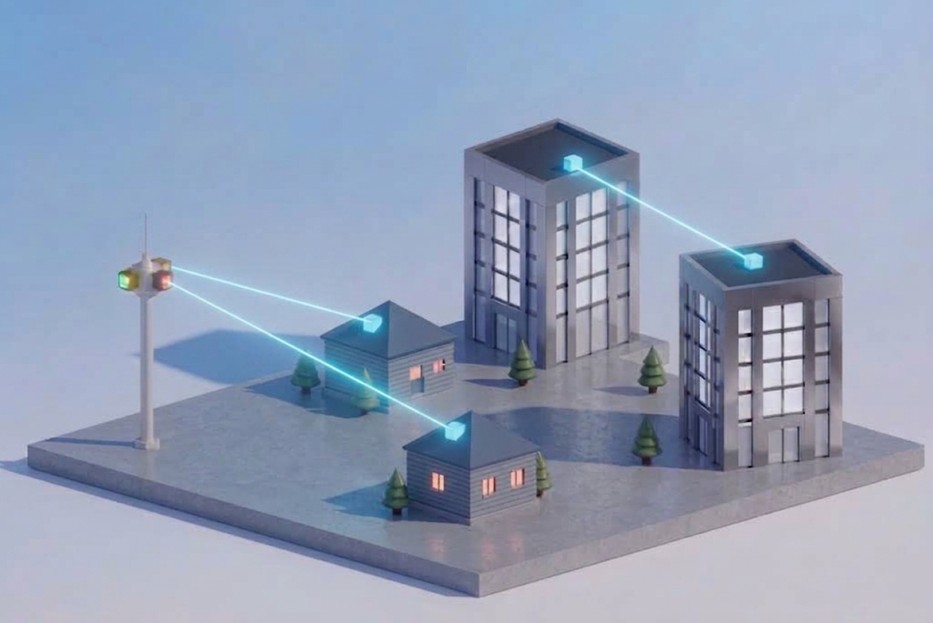
Altowav’s 60 GHz wireless bridges give WISPs, fiber providers, and campus network operators the performance and agility to rapidly build new gigabit networks and expand existing deployments across communities, MDUs, commercial campuses, and large facilities. Deploy point-to-point and point-to-multipoint links for last mile and campus connectivity, indoor backhaul, and temporary deployments.
- Fast time to service: Deploy service in days, with auto-aligning links online in minutes.
- High throughput & low latency: Up to 3.8 Gbps aggregate Layer 2 throughput at 400m with sub-1 ms latency.
- Low total cost of ownership: Mount on existing structures, operate in license-free spectrum, and serve up to 15 clients per distribution radio.
- Topology flexibility & scalability: Build PtP/PtMP networks to fit each deployment, then easily expand reach and capacity.
- Reliable, interference-resilient operation: Maintain service quality in dense networks with clean 60 GHz spectrum, GPS-synchronized TDMA scheduling, and remote network management.
- Discreet appearance & minimal footprint: Compact radios, typically 14 oz, fit more mounting locations with minimal visual impact.
Last Mile & Campus Connectivity Comparison Guide: 7 Key Factors
This Last Mile & Campus Connectivity Comparison Guide evaluates Altowav 60 GHz wireless bridges, fiber, sub-6 GHz and CBRS networks, 4G/5G cellular, and cable broadband across seven deployment and operational factors.

1. Fast Time to Service
Time to service for last mile and campus connectivity deployments directly impacts how quickly a provider can capture revenue as well as whether they can offer the most competitive delivery timeline in a bid. Factors such as civil construction, trenching, and permitting add time. Manual alignments can also slow down installations.
Altowav. Altowav’s combination of deployment advantages enables service delivery in days. 60 GHz wireless bridges mount directly to existing walls, rooftops, and existing or newly placed poles – eliminating trenching, boring, right-of-way construction, and associated permitting delays. Links come online in minutes as auto-aligning phased-array beamforming finds and locks the connection automatically, eliminating time-consuming manual pointing and tuning.
Fiber. Fiber deployment timelines routinely take months due to physical construction and multi-party coordination. Underground builds require trenching, street excavation, and municipal right-of-way permits. Aerial builds avoid excavation but introduce lengthy pole-attachment approvals, make-ready work, messenger stranding, and delicate fusion splicing.
Other alternatives. Sub-6 GHz and CBRS networks typically deploy in weeks, driven by RF site surveys, frequency planning, site access, and physical mounting. Projects requiring new poles or towers add substantial zoning and construction lead time. 4G/5G cellular avoids infrastructure builds where coverage exists, but service activation hinges on carrier provisioning schedules and local cell capacity. Extending cable plants reintroduces civil permitting, utility coordination, and construction delays.

2. High Throughput & Low Latency
Throughput and latency shape the quality, capacity, and economic value of network connections. High throughput ensures a link carries peak traffic without bottlenecks while preserving headroom for growth. Low latency keeps the network responsive, maintains consistent service quality, and prevents delay from compounding across connected systems.
Altowav. Altowav delivers up to 3.8 Gbps aggregate Layer 2 throughput at 400m with sub-1 ms latency, handling heavy multi-gigabit workloads while maintaining responsive performance for latency-sensitive traffic.
Fiber. Dedicated point-to-point fiber delivers symmetrical throughput from 1 Gbps to 100 Gbps or more with sub-1 ms latency across last mile and campus distances. In shared Passive Optical Network (PON) architectures, latency typically runs 1–5 ms, and per-endpoint throughput varies based on optical split ratios and concurrent network utilization.
Other alternatives. Sub-6 GHz and CBRS wireless links typically deliver 100 Mbps to 1 Gbps with 5–30 ms latency, with throughput degrading as channel contention and interference rise. 4G/5G cellular typically delivers 20–500 Mbps with 20–60 ms latency, with performance varying based on cell loading and signal path. Cable broadband typically delivers 100 Mbps to 1–2 Gbps downstream, 10–200 Mbps upstream, and 10–25 ms latency, with performance subject to shared-node utilization.

3. Total Cost of Ownership (TCO)
Total cost of ownership shapes how quickly a network for last mile connectivity pays back its investment and how profitably it serves each location over time. Upfront costs span construction, equipment, and installation labor, while ongoing costs include spectrum and other recurring fees, maintenance, and network administration. Networks that minimize civil work, share distribution infrastructure, and reduce hands-on labor lower the cost per location.
Altowav. Altowav lowers upfront and ongoing costs through labor-efficient installation, shared infrastructure, and remote administration. Radios mount on existing walls, rooftops, and poles, avoiding trenching, boring, and right-of-way construction, while auto-alignment reduces manual pointing and tuning labor. License-free 60 GHz operation eliminates spectrum licensing fees. In PtMP deployments, each D621 distribution radio serves up to 15 clients, spreading infrastructure costs across multiple connections. An open REST API supports automated administration through existing management systems, reducing repetitive manual work.

4. Topology Flexibility & Scalability
For campus and last mile connectivity, network topology flexibility and scalability determine how easily deployments adapt to site constraints, route around physical obstacles, and expand as demand grows. A flexible architecture supports point-to-point links and point-to-multipoint distribution to reach varied locations across campus and last mile environments. Scalable networks allow operators to add subscribers, extend reach, and increase capacity – preserving capital and avoiding disruptive re-engineering.
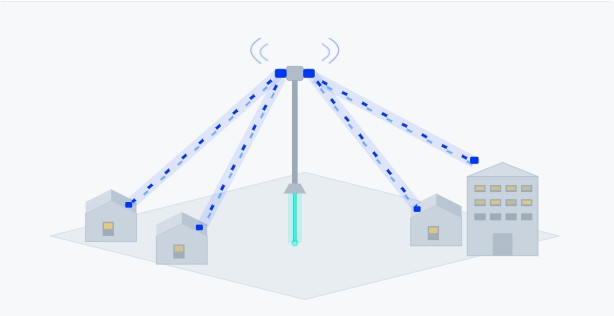
Altowav. Each Altowav D621 distribution radio serves up to 15 client radios, with the option to link to another distribution radio, supporting both backbone links and subscriber distribution. Distribution links can daisy-chain, branch, or create multi-hop paths to route around line-of-sight obstructions and extend service across campuses or neighborhoods from a single fiber point of presence. Each D621 covers an independent 90° sector, allowing operators to deploy sectors only in the directions service is needed. Within an existing sector’s coverage and available capacity, operators can add subscribers or buildings incrementally by adding a client radio, without redesigning the existing network.
5. Clean Spectrum & Interference Resilience
Clean spectrum and interference resilience determine how well a network sustains the throughput and low latency required for campus and last mile connectivity as links and neighboring networks multiply Interference from co-located radios and nearby operators degrades both, which can drive service complaints and truck rolls. Networks that reuse spectrum efficiently across nearby links and coordinate transmissions in dense deployments support more connections while keeping service quality high.
Altowav. Altowav supports four non-overlapping 2.16 GHz channels in the license-free 60 GHz band. Narrow beams concentrate each link’s signal, and natural oxygen absorption limits how far it travels, keeping spectrum clean and allowing channels to be reused as networks grow. Deterministic TDMA scheduling with reserved client time slots, GPS synchronization across the network, and Golay codes reduce co-channel and self-interference, maintaining reliable performance in dense, co-located deployments. Altowav delivers up to 3.8 Gbps aggregate Layer 2 throughput on a single channel, leaving other channels available for neighboring links.

6. Service Reliability & Remote Management
Service reliability and remote management determine how well a network keeps users connected and how efficiently operators can run it as it grows. In campus and last mile connectivity networks, outages and degraded links can drive subscriber churn, service-level penalties, and costly site visits. Networks that withstand outdoor conditions and route around failed links minimize downtime. Remote management through existing systems speeds issue resolution and controls operating costs.
Altowav. Carrier-grade AltoPlex radios use die-cast, powder-coated aluminum chassis with IP67 weather sealing, rated for outdoor operation from -30°C to +55°C. Adaptive beamforming and adaptive modulation keep links resilient as conditions change, and distribution links can form redundant rings that reroute traffic if a link goes down. Operators monitor link status and performance, change configurations, run software upgrades, and troubleshoot issues remotely through a web interface or an open REST API that integrates with their existing management systems.
7. Discreet Appearance & Minimal Footprint
Equipment appearance and footprint shape where and how easily operators can deploy radios. Conspicuous hardware can slow landlord, HOA, and permitting approvals, while larger, heavier equipment adds structural load to poles and consumes limited mounting space. Compact, low-profile equipment with clean installations accommodates more mounting locations with minimal visual impact. For operators competing for HOA, MDU, and campus contracts, a visually clean installation can help win bids by addressing aesthetic concerns upfront.
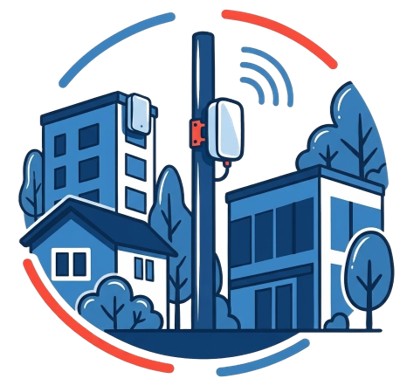
Altowav. AltoPlex radios typically measure 5.9″ × 3.7″ × 1.4″ and weigh 14 oz, with an integrated phased-array antenna inside the enclosure. Integrated mounts and a single PoE cable keep installations clean on poles, streetlights, facades, and rooftops across campus and last mile connectivity deployments. The compact profile fits unobtrusively into residential communities, MDUs, and campuses, helping preserve property aesthetics.
60 GHz Wireless Connectivity Technology Leader
Altowav is the 60 GHz wireless connectivity technology leader, focused exclusively on 60 GHz, with more than 100 customers across last mile, campus, physical security, and smart city networks.
Production deployments. Altowav 60 GHz wireless bridges and radios are in production at Mall of America, Sherwin-Williams, Sanmina, Westchester Medical Center, Endicott College, West Geauga Local Schools, Casino Pauma, and Swinomish Casino & Lodge, and are deployed by service providers including Kwikbit Internet and Northwest Towers.
Case studies. At Sierra Vista Village, Kwikbit Internet’s AltoPlex radios blanket 235 homes and a 55-space RV park with gigabit wireless from a single fiber source, with none of the months of torn-up streets nearby communities endured with fiber and cable builds. Kwikbit credits the independent distribution radios with more flexible, lower-cost installations.
Distributors. AltoPlex 60 GHz wireless bridges, radios, starter kits, and accessories are available through leading distributors, including ADI Global Distribution, Graybar, Wesco, and Winncom Technologies.
Altowav Deployment Models
Altowav’s 60 GHz wireless bridges adapt to the connectivity requirements of different sites and applications. The auto-aligning radio family supports point-to-point and point-to-multipoint networks across a variety of deployment models, including last mile connectivity, MDU and campus interconnects, indoor backhaul, and temporary deployment. These models demonstrate how operators can extend high-speed connectivity without extensive new cable infrastructure. Altowav also supports physical security and smart city networks.
Last Mile Connectivity
The fastest path to fiber-speed broadband
Deliver gigabit broadband to homes and businesses without trenching a single foot of fiber. Altowav radios connect subscribers at fiber speed with 10x faster deployment and a fraction of the infrastructure cost.
MDU & Campus Interconnects
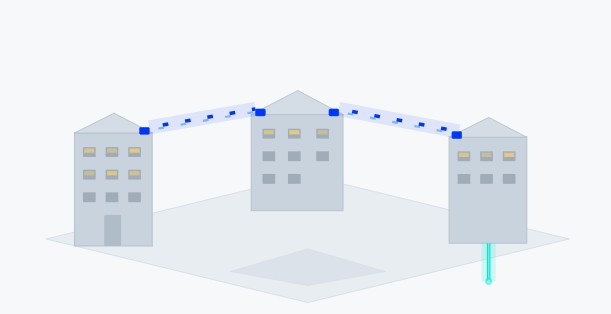
Connect buildings without breaking ground
Link garden-style apartments, campus facilities, and multi-dwelling units with high-speed wireless interconnects. A wireless alternative to GPON that connects urban MDUs without trenching, permits, or construction disruption.
Indoor Backhaul
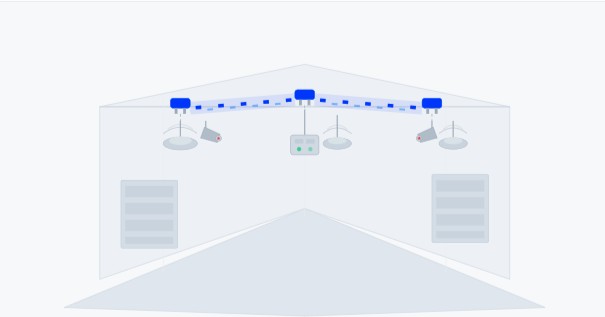
Cut the cable inside the building, too
Warehouses, distribution centers, and manufacturing floors face the same backhaul challenge indoors. Altowav radios connect APs, cameras, and IoT gateways inside large facilities without pulling cable through ceilings and raceways.
Temporary Deployment
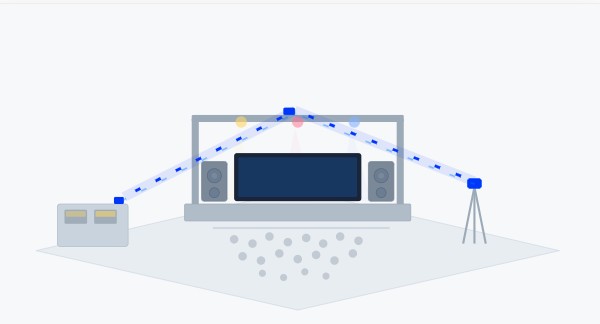
Gigabit networks deployed in hours
Events, construction sites, disaster response, and seasonal venues need connectivity fast. Altowav radios install in minutes with auto-aligning antennas: no specialized crew, no permits, no permanent infrastructure.